Beijing Hutongs
Hutongs are a characteristic of Beijing. Hutong culture has even gone beyond Beijing, influencing the urban and rural architectural patterns in many places in the Yellow River Basin. However, only Beijing’s hutongs are famous. No matter how much cultural heritage grand ancient buildings like the Forbidden City, the Temple of Heaven, and the Lama Temple add to Beijing, or how dazzling modern buildings like the Bird’s Nest, the Water Cube, and the CCTV Headquarters make Beijing look, without hutongs, Beijing would lack too much of the breath of life. Beijing’s hutongs are like the slums of Dharavi in Mumbai, India, Kibera in Nairobi, Kenya, and Ciudad Nezahualcóyotl in Mexico City, making people feel intimate.
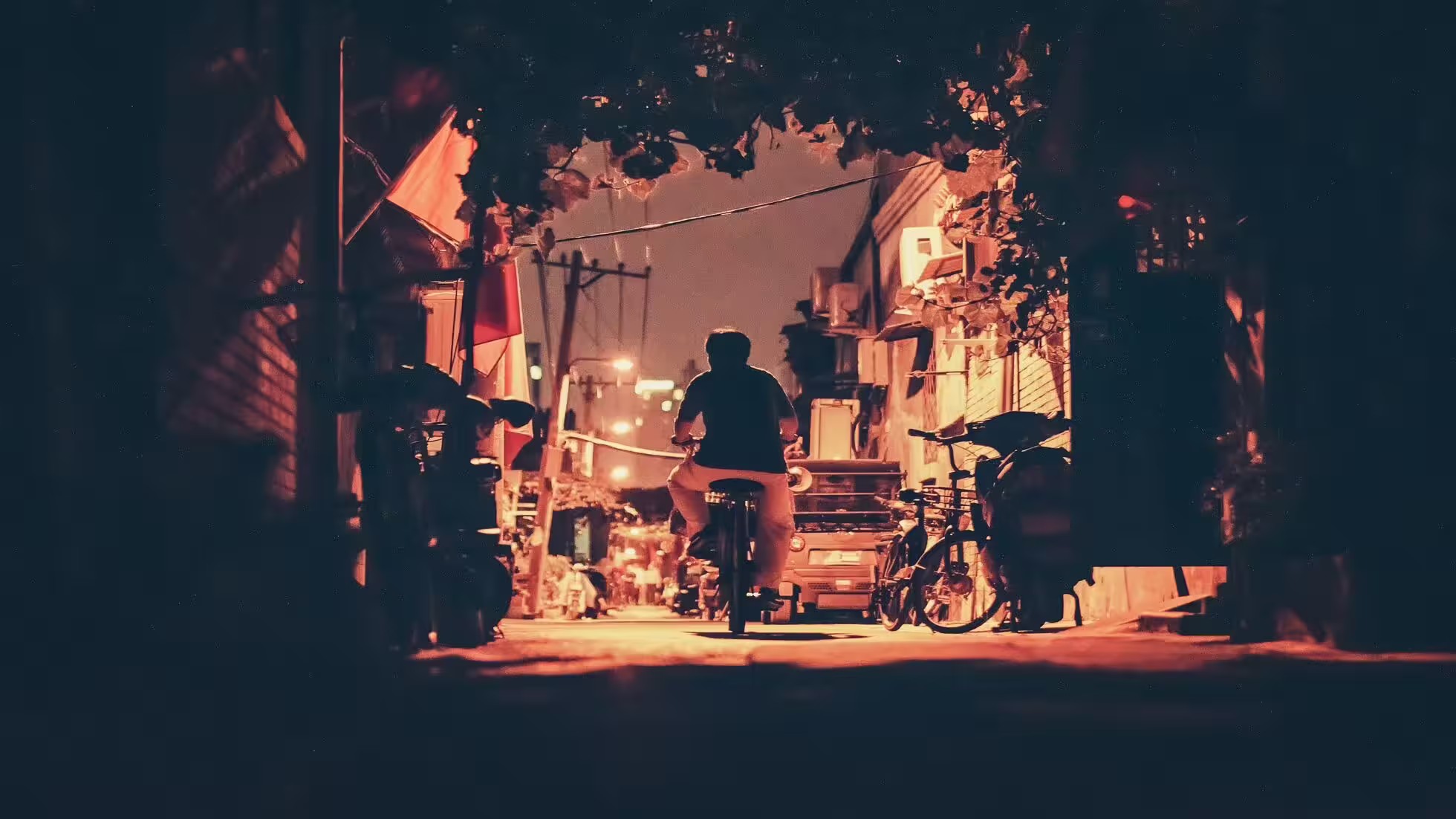
I don’t have much affection for Beijing. At night, the tall buildings on both sides of the road are pitch black, and there is no place to eat or stay. At this time, as long as you walk into a hutong, you can find a noodle shop or a snack bar after a few turns. There is no need to care about hygiene and taste, because there is no gourmet food in Beijing, all food has one taste, salty; let alone worry about the price, because most of these small shops are prepared for drifters in Beijing and migrant workers. The prices are fair and guarantee you get full.
The more prosperous the place in Beijing, the more hutongs there are. As more and more landmark buildings are built around them, the value of hutongs has also risen. Later, the government completely lost the ability to demolish these hutongs. So the dark, crowded, dirty and messy hutongs have become the scars of the city in the eyes of managers, but they are indeed the haven for the people at the bottom. At night, when the empty roads are silent, the hutongs are still lively. At this time, taxi drivers and delivery guys have just got off work. They gather in small shops in the hutongs, order a bottle of Erguotou, order three or four side dishes, invite five or six friends, drink until late at night, and eliminate the fatigue of the day.
If one day, Beijing’s hutongs disappear, those living in the hutongs can only flee Beijing. Beijing’s nights will be quieter, and not just the nights, the days may not be as prosperous either. With the construction and improvement of the Tongzhou sub-center and the Xiongan non-capital function zone, it is unknown whether Beijing will become hollowed out, but more ordinary workers will follow these non-capital function enterprises and schools to Tongzhou, Xiongan and other places. Hutongs will inevitably become as quiet as Beijing’s main streets.
Published at: Apr 4, 2021 · Modified at: Dec 12, 2025